National Institute of GeneticsIndividual Biology Unit

Understanding life as it lives.

Even when genes and environments are matched, individuals do not follow identical courses. We follow living cells and embryos to study the molecular processes through which differences emerge, develop into individual traits, and lead to later outcomes. By connecting our understanding of these processes to the understanding of individual lives, we aim to establish a new field: Individual Biology.

Explore our research
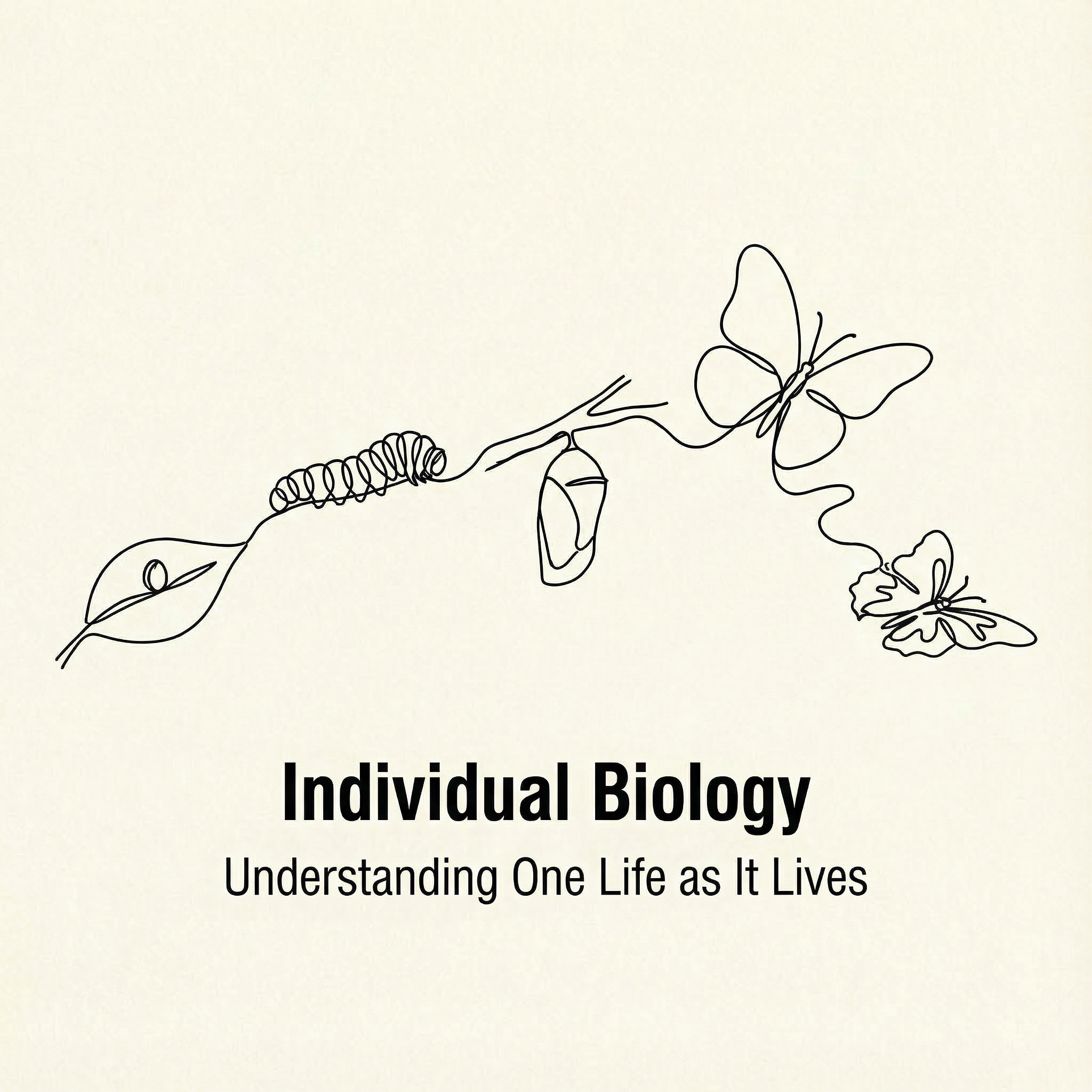
Line drawing of a single life progressing from egg to larva, pupa, and butterfly. Individual Biology — Understanding One Life as It Lives
Individual Biology Unit · Torii LabMISHIMA, JAPAN
01

Life trajectoriesWhat we study: life trajectories

Life trajectories: changes unique to each individual

We use “life trajectory” to describe the course of a single life, from changes in molecular state to its later traits and outcomes.

Our work has begun to show that changes in molecular state associated with later outcomes are specific to individual cells and embryos. Individuality appears not only in eventual traits but also in the molecular trajectories that precede them.

We compare individual life trajectories to investigate how molecular differences unfold in sequence and relate to individual traits and later outcomes. By examining both shared patterns and variation, we seek to understand how individuality develops and diversity emerges within a population.

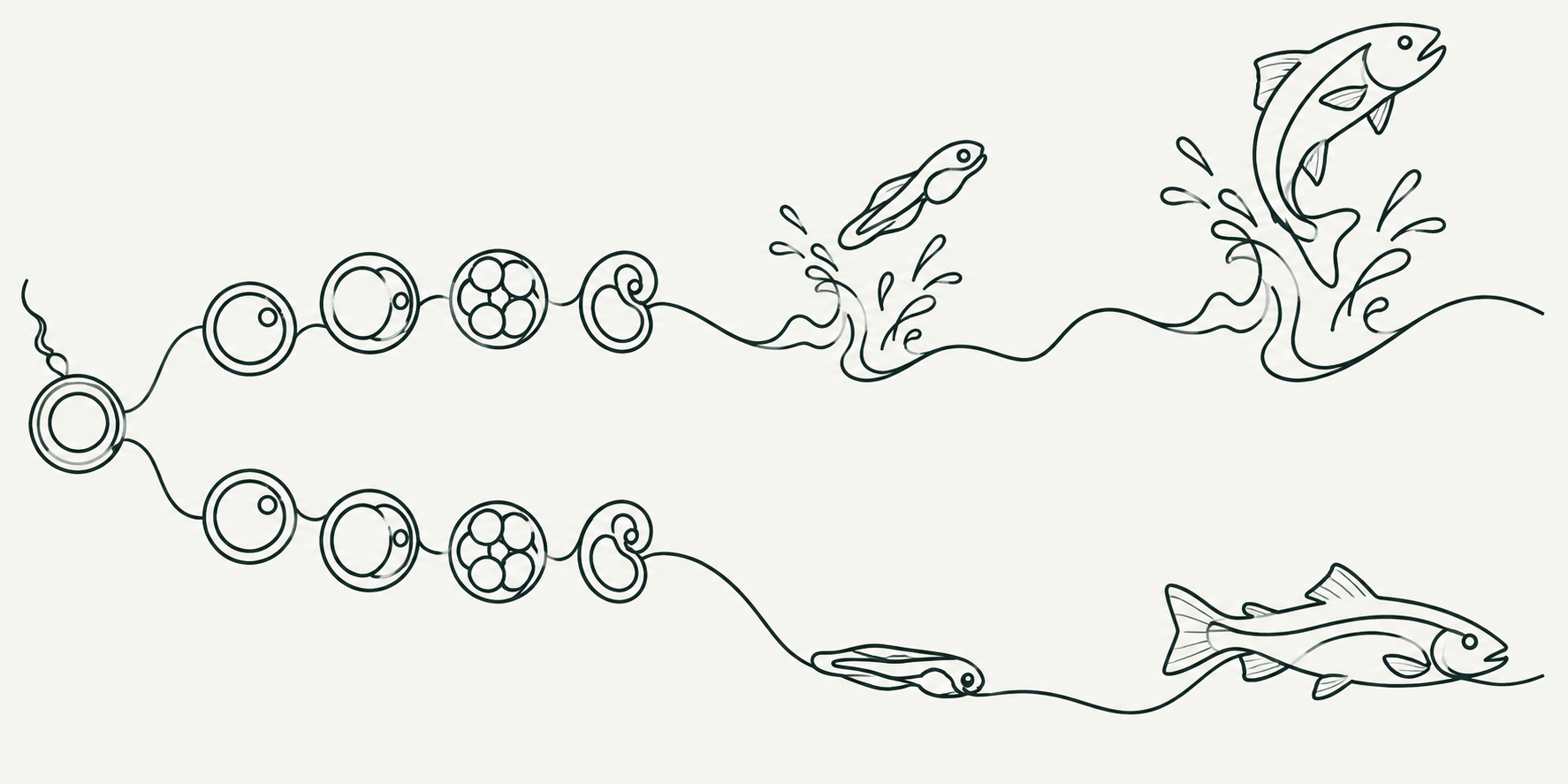
Schematic life trajectories branching from a shared developmental process into the lives of fish with different activity levels
Figure: spontaneous individualization

Differences in activity are present soon after birth and persist throughout life.

Where do these individual differences come from?

02

Our approachHow we study them

Measuring molecular dynamics in living cells and embryos

Swipe the diagram or tap 01–03 to explore

01 / 03
SNAPSHOTSDestructive methods measure each cell at only one time point.In single-cell RNA-seq, every data point comes from a different cell. Cells measured at a later time point are not the same cells measured earlier.
Thus, even time-series data do not record the continuity of an individual life, leaving its actual trajectory unknown.
Molecular state● t0◆ t1■ t2▲ t3
t0t1t2t3?????????Traits / fate

01Limits of destructive methods

Destructive measurement,no subsequent observation.

Many methods in molecular biology require cells to be destroyed for measurement. This also applies to omics approaches that comprehensively profile intracellular molecules, including the now widely used single-cell RNA-seq. Although these methods reveal a cell's state in detail, they cannot show how that same cell changes afterward. Arranging measurements from different cells along a time axis does not directly reveal the path an individual living cell followed from past to present to future.

Live-cell transcriptomics

This method collects a small amount of RNA while keeping the cell alive. Using an electrokinetic approach with a fine glass micropipette, we can measure molecular states without destroying the cell.

SAMPLING MECHANISM

Collecting RNA with a fine glass micropipette and electrical stimulation

01Open membrane pores with electrical pulses
CellElectricalpulsesMicropipettePore
Electroporation temporarily permeabilizes the cell membrane near the tip of the glass micropipette.
02Collect RNA in the glass micropipette
Cell+RNA
Electrophoresis and related processes are used to collect a small amount of RNA from the living cell.
03Withdraw the micropipette and recover RNA
CellRNA sampleMembrane resealing
The collected sample is analyzed by RNA-seq. Pores in the cell membrane reseal naturally.
03

Research focusCurrent research

Our current research

Application

Developing methods to assess pregnancy potential in IVF

We investigate molecular states in living embryos to explore ways of predicting later embryonic lethality. Our basic research aims toward future applications in bovine embryo assessment and in vitro fertilization (IVF).

Engineering

Developing methods for parallel embryo sampling

We develop systems for collecting RNA from many embryos simultaneously. By combining microfabrication and automated control, we enable large-scale measurements with improved efficiency and reproducibility.

Informatics

Accurate cell-fate prediction by learning living molecular dynamics

We develop tools that learn the relationships between molecular dynamics and outcomes in living cells to predict their life trajectories. By training models on continuous records of living cells, we aim to predict cellular dynamics more accurately.

Life science

Understanding spontaneous individuation

When do behavioral differences emerge, and how do they persist even under matched genetic and rearing conditions? We follow C. elegans embryos with Live-cell Transcriptomics to investigate how early molecular differences relate to later development and behavior. Our goal is to uncover a third mechanism, beyond heredity and environment, that generates biological diversity among individuals.

04

Selected workSelected publications

Preprint

We tracked molecular states over time within the same living cell or embryo.

Live-organismal Transcriptomics

Torii K., Watanabe K., Gordon A. M., et al.Research Square

Preprints are publicly available manuscripts that have not yet been peer reviewed. Please check the linked manuscript or article page for the latest version.

05

PeoplePeople

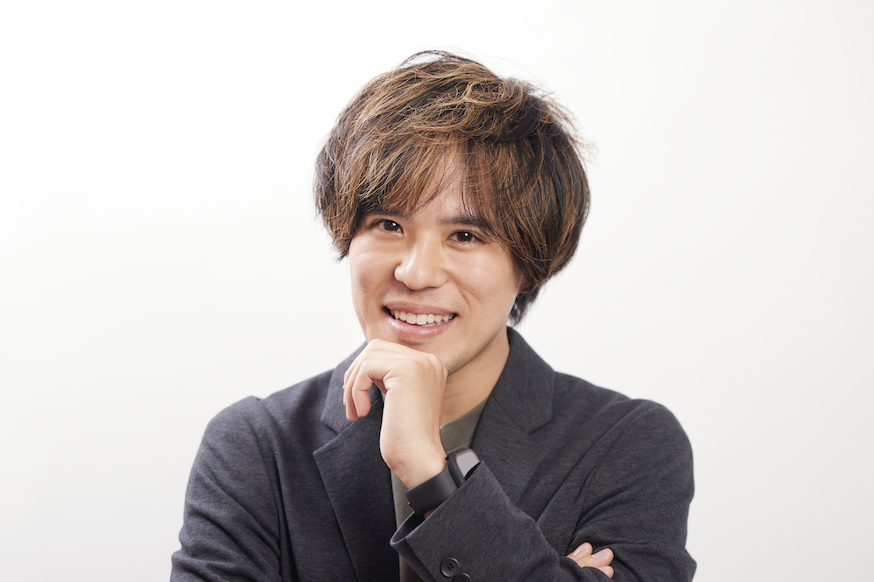
Kotaro Torii

Principal investigator

Kotaro ToriiPh.D.

Project Associate Professor

I have developed methods for repeatedly sampling RNA from living cells and embryos. Through measurement technology development and time-series data analysis, I study how changes in an individual's molecular state relate to its later traits and outcomes.

Career

2026 —
Project Associate Professor, Integrated Research Core, National Institute of Genetics
2024 —
JST PRESTO Researcher (Dual Biological Potentials)
2025 — 2026
Research Scientist, TRIP-AGIS, RIKEN
2020 — 2025
Postdoctoral Researcher, RIKEN
Cluster for Pioneering Research (2020–2024); Center for Sustainable Resource Science (2024–2025)
2020
Completed the doctoral program, Graduate School of Biostudies, Kyoto University
Ph.D. in Life Sciences
06

Join & ContactOpportunities and contact

Interested in our work?

We investigate questions in the life sciences using engineering and computational methods. We welcome people interested in instrument development and data analysis as well as experimental research. My own background is in plant science. You do not need to have these skills before joining. Please get in touch if you are interested in graduate study, a lab visit, or collaboration.

Skills you can develop

  • Microfabrication, instrument development, and measurement control
  • RNA-seq experimental design and data analysis
  • Quantifying phenotypes from images and videos
  • Time-series analysis, machine learning, and inference of gene regulation

Contact

kotaro.torii@nig.ac.jp
Individual Biology Unit, Integrated Research Core, National Institute of Genetics
1111 Yata, Mishima, Shizuoka 411-8540, Japan
Room W307, W Building (east side)
055-981-5837
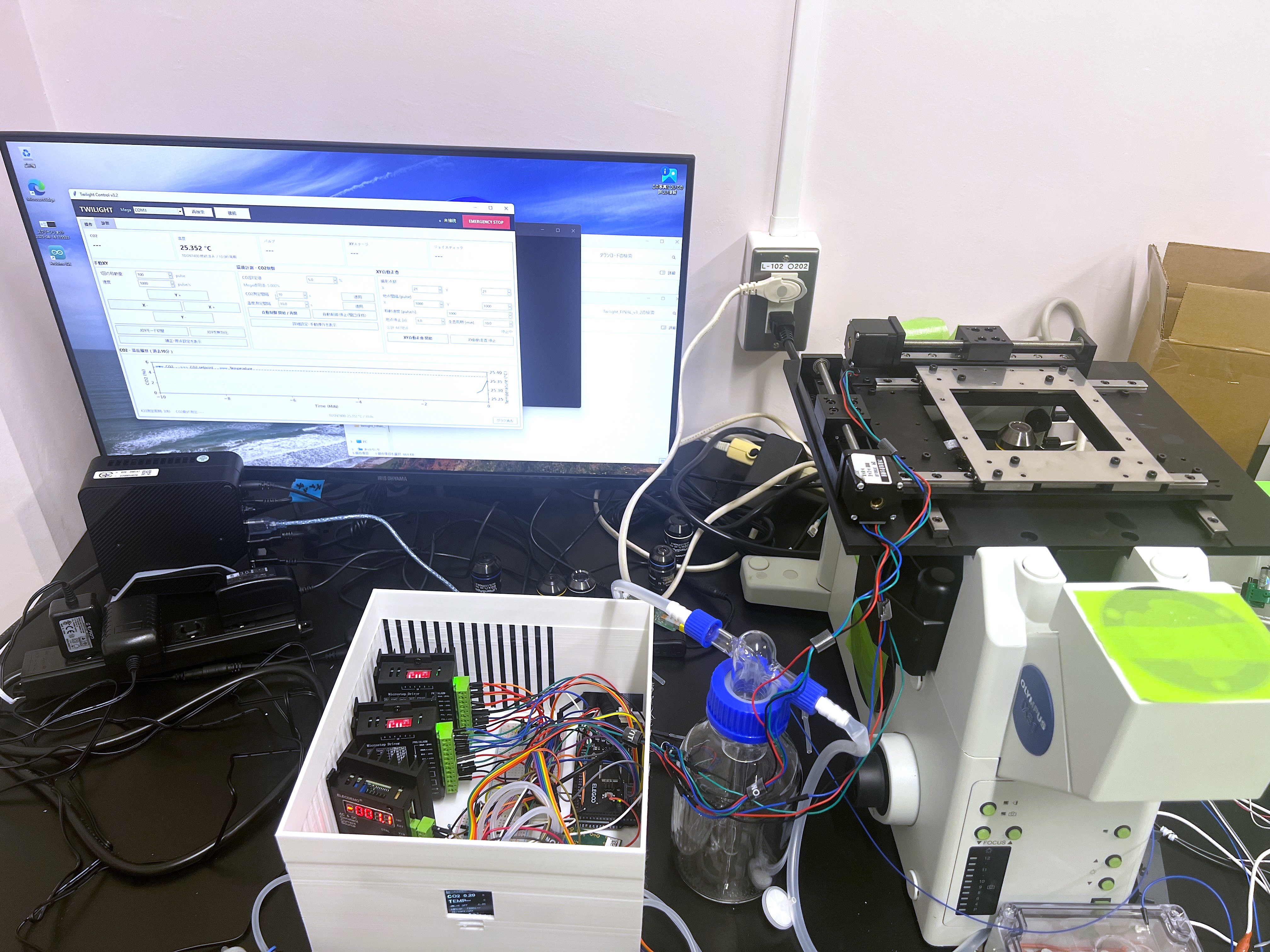
Imaging setup combining a microscope, a custom-built stage, and a measurement control system

Build instruments, take measurements, and analyze data

We combine microscopes and sampling devices to control measurements. We analyze the resulting RNA-seq data and videos to relate molecular states to development and behavior. Working across experiments and analysis offers experience in developing the methods needed to answer a research question.

NewsUpdates

The Individual Biology Unit launched at the National Institute of Genetics.